
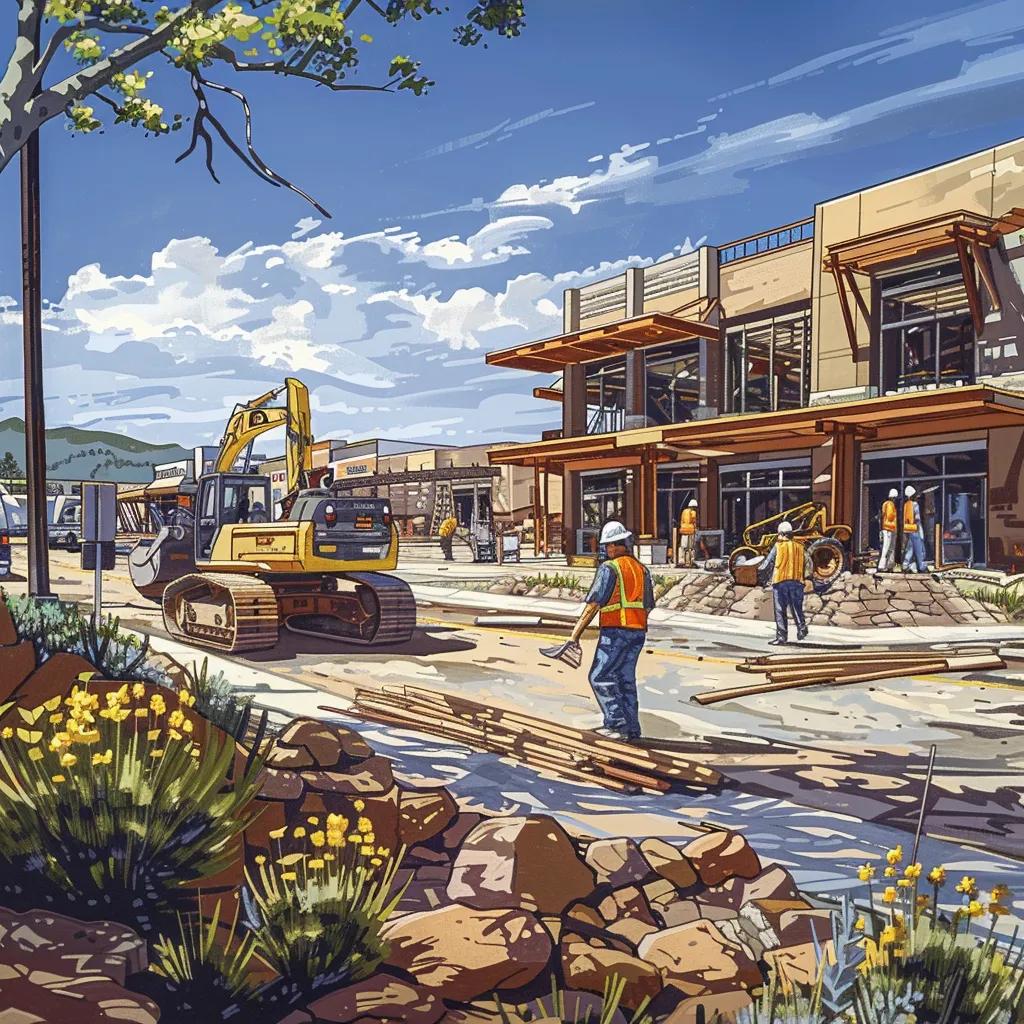
Commercial Builder Prescott Valley: Comprehensive Guide to Local Commercial Construction Services

Prescott Valley’s commercial construction landscape demands precision, local expertise, and timely delivery to transform vacant lots into thriving business hubs. In this guide, you’ll discover how a skilled commercial builder in Prescott Valley leverages deep local market knowledge, strong municipal relationships, and proven craftsmanship to deliver new builds, renovations, tenant improvements, and sustainable projects. We’ll cover core services, permitting processes, cost factors, project types, green building practices, selection criteria, and real-world portfolios to ensure you choose the right partner for your next commercial venture.
What Commercial Construction Services Are Offered by Builders in Prescott Valley?
Commercial construction services in Prescott Valley span the full project lifecycle—from initial concept through final occupancy—ensuring seamless execution and quality craftsmanship. Builders integrate planning, design, permitting, construction, and close-out under one roof to maintain schedule and budget alignment.
Key commercial construction services include:
- New Builds – Ground-up commercial facilities tailored to site specifics and business needs.
- Renovations – Interior and exterior upgrades that modernize existing properties.
- Tenant Improvements – Customized fit-outs to meet tenant specifications and brand identity.
- Design-Build – Single-contract approach merging design and construction for efficiency.
- Project Management – End-to-end coordination, cost control, and quality assurance.
These services establish a foundation for successful commercial developments by combining technical expertise with local insight.
Which Types of Commercial Properties Do Prescott Valley Builders Specialize In?

Prescott Valley builders specialize in a broad spectrum of commercial property types, adapting methods and materials to suit each sector’s demands. This versatility optimizes design, permitting, and construction workflows for specific end uses.
| Property Type | Characteristic | Typical Use |
|---|---|---|
| Retail Space | Customer-focused layouts | Shops, restaurants, service centers |
| Office Building | Flexible floor plans | Professional suites, coworking |
| Industrial Facility | Heavy-duty structures | Warehouses, light manufacturing |
| Healthcare Facility | Specialized mechanical systems | Clinics, medical offices |
| Mixed-Use Development | Multi-zoned integration | Ground-floor retail with residences |
Each property type demands tailored expertise, guiding the choice of structural systems, finishes, and municipal approvals.
How Do Local Builders Manage New Builds, Renovations, and Tenant Improvements?
Local builders streamline project delivery by coordinating planning, permits, on-site construction, and stakeholder communication to meet deadlines and budgets. Early collaboration avoids delays, while proactive quality inspections ensure code compliance.
Key management steps include:
- Conducting detailed site assessments and feasibility studies
- Securing zoning approvals and building permits
- Scheduling trades, inspections, and material deliveries
- Implementing quality control and safety protocols
- Maintaining transparent client communication and progress reporting
These processes reduce risk and accelerate occupancy, supporting Prescott Valley’s economic growth.
What Are the Benefits of Choosing a Prescott Valley Commercial General Contractor?
Selecting a Prescott Valley general contractor offers unmatched local connections, regulatory know-how, and community commitment. Their deep relationships with municipal departments and suppliers translate into expedited approvals and competitive pricing.
Primary benefits include:
- Local Expertise – In-depth knowledge of Prescott Valley regulations and soil conditions
- Municipal Relationships – Established rapport with Development Services for faster reviews
- Supply Chain Access – Preferred subcontractor networks that ensure reliable materials
- Timely Delivery – Proven track record of on-schedule project completion
- Quality Craftsmanship – Emphasis on durability and finish standards
These advantages minimize setbacks and maximize return on investment for commercial property owners.
How Does the Commercial Building Permit Process Work in Prescott Valley?
Prescott Valley’s permit process begins with pre-application planning, proceeds through formal submissions, and concludes with inspections and final occupancy sign-off by Development Services. Clear guidelines and checklists streamline approvals for builders and owners.
Five key permit process steps:
- Pre-Application Meeting – Review project scope with planning staff
- Site Plan Submission – Provide architectural drawings and engineering reports
- Permit Application – Complete forms for building, electrical, plumbing, and mechanical
- Inspections Schedule – Coordinate rough-in, framing, and final inspections
- Certificate of Occupancy – Obtain final approval for safe occupancy
Following this sequence enables predictable timelines and avoids permit-related delays.
What Permits Are Required for Commercial Construction in Prescott Valley?
Every commercial project in Prescott Valley requires a set of standardized permits to comply with building codes, safety regulations, and zoning ordinances. Proper documentation ensures code adherence and site safety.
| Permit Type | Issuing Agency | Purpose |
|---|---|---|
| Building Permit | Town of Prescott Valley Development Services | Structural framing and shell work |
| Electrical Permit | Town of Prescott Valley Development Services | Wiring of power and lighting systems |
| Plumbing Permit | Town of Prescott Valley Development Services | Installation of water and drainage lines |
| Mechanical Permit | Town of Prescott Valley Development Services | HVAC and ventilation system setup |
| Certificate of Occupancy | Town of Prescott Valley Development Services | Final approval for public use |
Securing these permits protects occupant safety and maintains regulatory compliance throughout construction.
How Can Builders Navigate Prescott Valley Zoning and Development Regulations?
Navigating local zoning requires thorough research and early engagement with planning officials to align land use, density, and design standards. Builders leverage pre-application meetings to identify required variances or special permits.
- Research zoning classification and land-use restrictions
- Schedule pre-application conference with planning staff
- Ensure building footprints and setbacks meet code
- Apply for variances or special use permits if needed
- Submit revised plans for compliance verification
By following these steps, builders reduce redesign cycles and expedite approvals.
Where to Find Official Prescott Valley Development Services and Resources?
Accessing authoritative resources supports informed planning and permit submissions. These entities provide guidelines, forms, and technical assistance to commercial builders and property owners.
- Town of Prescott Valley Development Services Department
- Prescott Valley Economic Development Foundation
- Arizona Registrar of Contractors (ROC)
- Yavapai County Planning and Zoning Division
- Prescott Valley Chamber of Commerce
Utilizing these resources ensures projects adhere to local standards and leverage available incentives.
What Are the Typical Costs and Financial Considerations for Commercial Construction in Prescott Valley?
Commercial construction costs in Prescott Valley vary based on project size, complexity, and material selections, with typical ranges between $120 and $200 per square foot. Understanding cost drivers helps owners budget accurately and secure appropriate financing.
- Base construction costs (materials and labor)
- Site preparation and earthwork expenses
- Architectural and engineering fees
- Permit and inspection fees
- Contingency reserves for market fluctuations
A realistic budget fosters on-time completion and safeguards project viability.
Commercial Construction Costs
Commercial construction costs in Prescott Valley can vary significantly based on project specifics, with typical costs ranging from $120 to $200 per square foot. These costs are influenced by factors such as materials, labor, site preparation, and permit fees, which owners must consider for accurate budgeting and financial planning.
RSMeans, Building Construction Cost Data (2024)
This research provides a general cost framework that helps inform the financial considerations discussed in the article.
How Much Does It Cost to Build Commercial Property in Prescott Valley?
| Project Size | Cost per Sq Ft | Typical Applications |
|---|---|---|
| Small (1,000–5,000 sf) | $150–200 | Boutique retail, small offices |
| Medium (5,000–20,000 sf) | $130–180 | Mid-size restaurants, medical suites |
| Large (>20,000 sf) | $120–160 | Warehouses, corporate office parks |
Cost transparency enables stakeholders to align design ambitions with financial resources.
What Financing Options Are Available for Commercial Construction Projects?
Commercial builders and owners can leverage diverse financing solutions—traditional loans, SBA programs, and equity partnerships—to cover ground-up construction or major renovations. Matching financing to project scope optimizes capital structure.
- Construction loans from local and regional banks
- U.S. Small Business Administration (SBA) 504 and 7(a) programs
- Lines of credit secured by real estate assets
- Equity partnerships and private investors
- Equipment leasing and vendor financing
Selecting the right financing mix reduces funding gaps and interest rate exposure.
How Do Rising Interest Rates Affect Commercial Building Projects in Prescott Valley?
Rising interest rates increase borrowing costs, influencing budget allocations and project feasibility. Builders and owners must adjust financing strategies and contingency reserves to mitigate rate fluctuations.
- Higher loan servicing costs shrink construction budgets
- Stricter lender qualification requirements limit borrowing capacity
- Increased contingency allocations to absorb cost overruns
- Potential project timeline extensions to secure favorable terms
- Incentivized use of fixed-rate loans or alternative financing
Proactive rate management preserves financial stability and project momentum.
Which Commercial Construction Project Types Are Most Common in Prescott Valley?
Prescott Valley’s growth drives demand for several key commercial project types: retail build-outs, industrial facilities, healthcare offices, professional workspaces, and mixed-use developments. Each category requires specialized design and construction approaches.
- Retail space development and tenant improvements
- Industrial warehouses and distribution centers
- Healthcare clinics and medical office buildings
- Class A office building and coworking spaces
- Mixed-use complexes combining residential and commercial
Adapting to local market trends ensures each project meets functional and financial goals.
What Are the Key Features of Retail Construction in Prescott Valley?
Retail construction emphasizes customer flow, brand presence, and code-compliant storefronts to maximize visibility and sales. Design must balance aesthetic appeal with functional layouts.
- Custom storefront facades and signage integration
- Optimized circulation patterns for customer experience
- Durable interior finishes suited to retail traffic
- ADA accessibility and safety compliance
- Efficient back-of-house service areas
Focusing on these features enhances tenant satisfaction and long-term asset value.
How Is Industrial Building Construction Evolving in Prescott Valley and Yavapai County?
Industrial construction in Prescott Valley adopts tilt-up panels, pre-engineered metal buildings, and sustainable design to support logistics and light manufacturing growth. Speed and efficiency drive modern industrial methods.
- Prefabricated tilt-up concrete and steel structures
- High-bay clear-span configurations for equipment
- Energy-efficient lighting and HVAC systems
- Advanced fire-suppression and safety technologies
- Site design for heavy vehicle access and staging
These innovations reduce timelines and operational costs for industrial tenants.
What Are the Trends in Healthcare Facility and Office Building Construction?
Healthcare and office projects increasingly integrate flexible layouts, advanced mechanical systems, and wellness-focused design to meet evolving user expectations and code requirements.
| Facility Type | Trend | Impact |
|---|---|---|
| Medical Offices | Telehealth-ready rooms | Supports remote patient consultations |
| Office Buildings | Smart building technologies | Enhances energy management and comfort |
By embracing these trends, developers attract discerning tenants and future-proof assets.
How Are Mixed-Use Developments Shaping Prescott Valley’s Commercial Landscape?
Mixed-use projects blend retail, office, and residential components to foster walkable communities and diversified revenue streams. Integrated design supports local economic vitality.
- Ground-floor commercial fronts with upper-level residences
- Shared parking and pedestrian pathways
- Community gathering spaces and plazas
- Zoning strategies for multi-use compatibility
- Phased development to manage investment risk
This approach revitalizes neighborhoods and aligns with Prescott Valley’s growth plans.
How Do Prescott Valley Commercial Builders Incorporate Sustainability and Green Building Practices?

Sustainability in commercial construction involves energy efficiency, resource conservation, and reduced environmental impact. Builders adopt green materials and techniques to achieve long-term operational savings and tenant appeal.
Sustainable Building Practices
Sustainable building practices are increasingly important in commercial construction, especially in Arizona’s climate. Implementing energy-efficient systems, using recycled materials, and reducing waste are key strategies for long-term operational savings and environmental stewardship.
U.S. Green Building Council, LEED v4.1 (2019)
This source supports the article’s discussion of sustainability and green building practices.
Core green building strategies include:
- Installing energy-efficient HVAC and lighting systems
- Using recycled and locally sourced building materials
- Implementing water-conservation fixtures and landscaping
- Integrating solar photovoltaic panels and shading devices
- Reducing construction waste through recycling programs
These practices support environmental stewardship and operating cost reductions.
What Sustainable Materials and Methods Are Used in Local Commercial Construction?
Prescott Valley builders incorporate advanced materials and construction methods that enhance thermal performance, durability, and indoor air quality without compromising aesthetics.
- Insulated concrete forms for high R-value walls
- Recycled steel framing and structural components
- Low-VOC paints and adhesives for healthy interiors
- High-performance glazing that balances light and heat gain
- Green roof systems for stormwater management
These selections demonstrate commitment to resilience and occupant well-being.
How Do Prefabricated Materials Improve Efficiency in Prescott Valley Projects?
Prefabricated building elements arrive ready for assembly, reducing onsite labor requirements and weather-related delays. This approach enhances quality control and accelerates milestones.
- Shortened construction schedules through parallel fabrication
- Consistent factory-controlled quality and tolerances
- Minimized material waste and on-site disturbances
- Improved safety by reducing onsite trades exposure
- Predictable cost management via fixed fabrication contracts
Faster assemblies translate into earlier occupancy and revenue generation.
Why Is Sustainability Important for Commercial Builders in Arizona?
Arizona’s arid climate and rising energy costs make sustainable construction a strategic advantage. Green practices yield long-term savings, regulatory incentives, and tenant demand for healthy environments.
- Extreme temperature resilience and reduced HVAC loads
- Utility rebate programs for high-efficiency equipment
- Enhanced building valuations and marketability
- Corporate ESG commitments and tenant expectations
- Conservation of limited water resources
Adopting green measures aligns projects with regional priorities and future regulations.
How Can Clients Evaluate and Choose the Best Commercial Builder in Prescott Valley?
Evaluating commercial builders requires assessing credentials, portfolios, and client feedback to gauge reliability, expertise, and regional knowledge. Clear criteria streamline vendor selection.
Five evaluation criteria include:
- Licensing and Certification – Verify Arizona ROC license and local permits track record
- Project Portfolio – Examine completed projects for similar scope and quality
- Client Testimonials – Review direct feedback on performance and communication
- Financial Stability – Ensure builder has bond capacity and insurance coverage
- Communication Style – Evaluate responsiveness and clarity in proposals
Using these benchmarks helps secure a trustworthy construction partner.
What Local Expertise and Track Record Should Clients Look For?
Clients should seek builders with a history of successful Prescott Valley projects, reflecting familiarity with local soils, weather patterns, and code requirements. Demonstrated permit success rates signal smooth approvals.
- Years of documented commercial construction in Prescott Valley
- Number of local projects completed on time and budget
- Permit approval ratios and code compliance records
- Established relationships with local subcontractors and suppliers
- Recognition or awards from regional industry associations
These factors minimize risk and accelerate project delivery.
How Do Client Testimonials and Project Portfolios Demonstrate Builder Reliability?
Detailed testimonials and case studies reveal a builder’s ability to overcome challenges, adhere to schedules, and maintain quality standards. Visual evidence and performance metrics reinforce credibility.
- Before-and-after photographs illustrating transformations
- Written feedback on communication, cost control, and results
- Metrics on schedule adherence and safety performance
- Repeat business ratios and long-term client relationships
- Detailed descriptions of problem-solving approaches
This transparency builds trust and informs confident decision-making.
What Certifications and Partnerships Enhance Builder Credibility?
Certifications and local partnerships signal a builder’s commitment to quality, safety, and community engagement. Such credentials often correlate with advanced capabilities and reliability.
- Arizona Registrar of Contractors license and bond filings
- LEED or similar sustainable building accreditations
- Membership in the Prescott Valley Economic Development Foundation
- Chamber of Commerce participation and local awards
- OSHA safety certifications and continuing education records
These credentials reassure clients of professional standards and community investment.
Where Can You Find Examples of Completed Commercial Construction Projects in Prescott Valley?
A robust project portfolio showcases a builder’s expertise across diverse commercial sectors and highlights their ability to navigate local conditions and regulations. Reviewing real examples informs scope and design choices.
- Retail centers and shopping plazas
- Class A office buildings and business parks
- Industrial warehouses and distribution hubs
- Medical clinics and specialty healthcare facilities
- Mixed-use developments combining retail and residential
Exploring these examples provides insight into design quality and execution.
What Are Notable Retail and Office Building Projects Completed Locally?
Prescott Valley builders have delivered standout retail and office developments that blend functionality with regional character. These projects illustrate tailored solutions for site constraints and municipal codes.
- Main Street Plaza – Multi-tenant retail center with integrated parking
- Riverfront Office Park – Class A office suites with shared amenities
- Frontier Crossing – Modern storefront facades and wayfinding systems
- Granite Ridge Business Campus – Adaptive reuse of historic structures
Each case highlights design innovation and local regulatory expertise.
How Have Builders Overcome Challenges in Prescott Valley Commercial Projects?
Unique site topography, seasonal weather swings, and supply chain disruptions require adaptive strategies. Builders solve these challenges through proactive planning, material sourcing, and alternate scheduling.
- Adjusting foundation designs for varying soil conditions
- Securing material commitments to mitigate delivery delays
- Phased construction to work around permit and inspection windows
- Deploying modular components to bypass weather impacts
- Collaborating with local authorities for expedited approvals
These solutions ensure project continuity and safeguard budgets.
How Do Project Portfolios Showcase Local Market Knowledge and Craftsmanship?
Well-documented portfolios illustrate how builders tailor designs to community aesthetics, incorporate local materials, and address region-specific requirements. Visual evidence underscores technical skill and creative problem-solving.
- Use of regional stone and masonry for authentic façades
- Custom metalwork reflecting local architectural styles
- Energy-efficient system integrations aligned with Arizona codes
- Community feedback and post-occupancy satisfaction reports
- Ongoing maintenance and warranty support for durability
These elements demonstrate a commitment to quality, local collaboration, and long-term performance.
Prescott Valley’s commercial construction sector thrives on focused expertise, streamlined permitting, thoughtful budgeting, and sustainable practices. By understanding core services, regulatory processes, cost drivers, project types, and builder qualifications, clients can confidently select a partner capable of delivering exceptional commercial properties. Partner with a local general contractor who combines deep municipal knowledge, proven craftsmanship, and a client-centric approach to bring your commercial vision to life in Prescott Valley.

