

When you find water damage in your home from a burst pipe, monsoon storm, or slow leak, the first question is always, “What should I do right now?” This guide gives you clear, actionable water damage restoration tips to help you protect your property and make smart decisions.
For homeowners in Prescott, Prescott Valley, Dewey-Humboldt, and Chino Valley, Arizona, Able & Ready Construction is the local, faith-based general contractor you can trust for emergency water mitigation and complete restoration. We solve water damage problems for families and property owners throughout the Quad-City area. With nearly two decades of experience, our licensed, bonded, and insured team (ROC286905) handles everything from initial drying to full-scale kitchen and bathroom remodels. We understand our region's unique challenges, from hard water impacting plumbing to intense seasonal storms, and we are here to help you recover with confidence.
This article breaks down the essential steps professionals take, explaining why each action matters for protecting your home’s value and your family’s health. We'll cover everything from immediate water extraction and scientific moisture assessment to strategic drying, mold prevention, and documenting damage for your insurance claim.
What is the first thing to do after water damage?
The first and most important step is to stop the water source if you can safely do so. Then, turn off the electricity to the affected areas at the breaker box to prevent electrocution hazards. Your safety is the top priority. After ensuring the area is safe, you should immediately contact a professional restoration company like Able & Ready Construction, serving the Prescott area, to begin the water extraction process.
Why is speed so important?
The Institute of Inspection, Cleaning and Restoration Certification (IICRC) defines a critical 24-48 hour window for water extraction. Within this timeframe, you can significantly reduce the scope of damage. After 48 hours, the risk of permanent structural harm and aggressive mold growth increases exponentially.
Failing to act swiftly leads to secondary damage. Drywall wicks moisture upward, wood floors warp and buckle, subfloors can delaminate, and insulation becomes a saturated breeding ground for mold. Professional teams use powerful, specialized equipment—not just shop vacuums—to remove bulk liquid so that drying and dehumidification can begin.
Key Insight: The success of your entire water damage restoration hinges on the speed and efficiency of this first step. Incomplete extraction means you will be fighting a losing battle against moisture and mold from the very beginning.
For example, when a burst pipe flooded a kitchen in a Prescott Valley home, a rapid response team removed all standing water in under four hours. This quick action prevented moisture from seeping under the cabinets and into the adjacent living room, saving the homeowner from a much more extensive and costly repair.
How do professionals find hidden water damage?
Professionals find hidden water damage by using advanced technology, not by just feeling a surface to see if it's wet. This scientific approach is a critical part of effective water damage restoration, as it uncovers moisture trapped within building materials that can lead to long-term structural problems and mold.
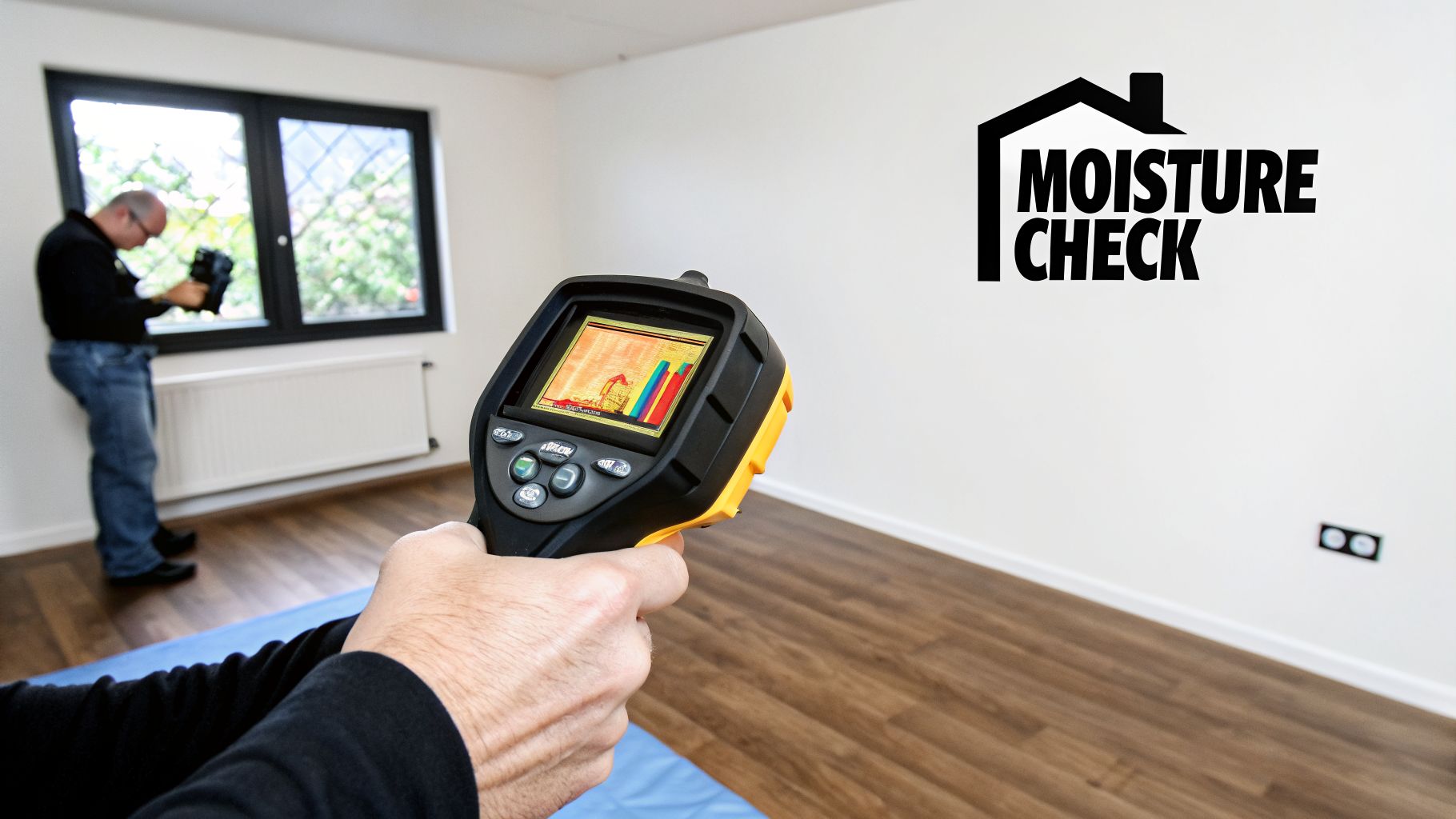
IICRC-certified restoration experts, like the team at Able & Ready Construction, use a combination of tools:
- Thermal Imaging Cameras: These spot temperature differences that indicate moisture behind walls, under floors, and in ceilings.
- Moisture Meters (Penetrating and Non-Penetrating): These give precise readings of moisture content in materials like drywall, wood studs, and subflooring.
- Hygrometers: These measure the humidity in the air to ensure the drying environment is optimized.
The goal is to bring all affected materials down to a safe, dry standard, which is typically below 15% moisture content.
Why is professional moisture detection necessary?
Invisible moisture is a ticking time bomb. Even after a surface looks and feels dry, moisture wicked inside drywall or trapped in wall cavities can foster mold colonies in as little as 48 hours. This hidden damage can compromise your home's structural integrity and indoor air quality weeks or months later. Continuous monitoring confirms the drying process is working and identifies any stubborn wet spots.
Key Insight: True dryness is a measurable, scientific state, not a visual guess. A professional restoration isn't complete until moisture meters confirm that all affected materials have reached their established dry standard.
For instance, during a bathroom remodel in Dewey-Humboldt, a thermal camera revealed hidden water damage behind old tile—a remnant of a slow leak the homeowners never knew existed. Detecting this allowed our team to properly dry the wall cavity, preventing a future mold infestation.
How does professional drying equipment work?
Professional drying is an active, science-based process called structural drying. It involves strategically placing high-velocity air movers, commercial dehumidifiers, and other specialized equipment to create powerful airflow patterns. This method actively pulls trapped moisture from deep within materials like drywall, wood studs, and subflooring, moving it into the air where dehumidifiers can capture and remove it.
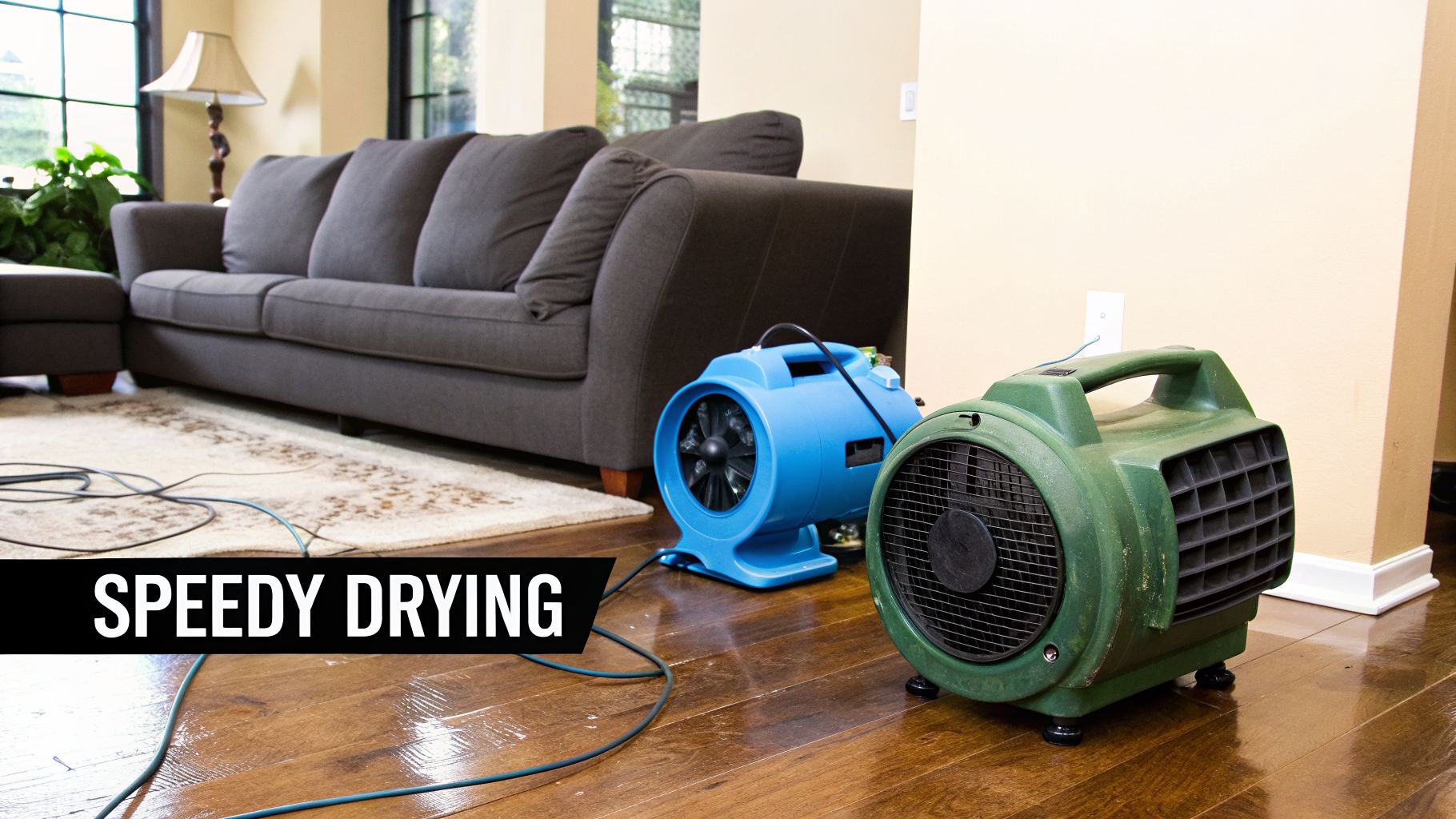
This calculated placement, guided by IICRC standards, is far more effective than using household fans. Professionals use moisture meters and thermal imaging to place equipment precisely where it's needed most, preventing the lingering dampness that leads to mold.
Why can't I just use my own fans?
Using just a few household fans won't create the necessary conditions for rapid, thorough drying. Improper drying is a primary cause of secondary damage and failed restoration efforts. When moisture is left behind in wall cavities or under flooring, it creates the perfect environment for mold to flourish within days. Strategic drying accelerates evaporation, drastically reducing the time materials are saturated and vulnerable.
Key Insight: The goal of professional drying is not just to circulate air, but to control temperature, humidity, and airflow to create a powerful drying vortex. This systematic approach is the only way to ensure the structure is returned to its pre-loss moisture content and prevent long-term issues.
For instance, after a kitchen pipe burst in a Prescott home, the strategic placement of eight industrial air movers and three large-capacity dehumidifiers completely dried a 1,200-square-foot area in just five days. Natural drying would have taken an estimated 3-4 weeks, guaranteeing severe mold growth.
Can you save flooring after water damage?
Whether you can save flooring depends on the flooring material, the type of water (clean vs. contaminated), and how long it was saturated. A professional assessment is required to make the right decision for your budget and the long-term health of your home.
While some materials like porcelain tile may be salvageable, others like saturated carpet, padding, and most types of wood flooring almost always require complete removal. Attempting to save compromised flooring can lead to hidden mold growth, structural decay in the subfloor, and persistent odors. A professional contractor like Able & Ready Construction helps weigh the cost of restoration against the benefits of upgrading to more durable, water-resistant materials.
Why not just dry the floor and keep it?
A hasty decision can be costly. Simply drying a warped hardwood floor, for example, won't reverse the damage, and moisture may remain trapped underneath. This creates a perfect environment for mold and rot. A thorough assessment prevents you from spending money on a "restoration" that is doomed to fail, forcing you to pay for a full replacement later.
Key Insight: Water damage presents a unique opportunity to upgrade your flooring to materials better suited for your home's environment, potentially preventing future issues. This is especially true in areas prone to moisture, like kitchens and bathrooms.
After a dishwasher leak in a Prescott Valley kitchen, we determined the adjacent dining area's laminate was unsalvageable. We recommended upgrading to Luxury Vinyl Plank (LVP), a waterproof option that protected the area from future incidents and aligned with the homeowner's long-term goals.
Do you always have to remove drywall after a water leak?
You must remove drywall if it has become saturated. Drywall acts like a sponge, wicking water upward, and if it's not handled correctly, it becomes a breeding ground for mold. The extent of the damage and the source of the water determine whether a partial or complete removal is necessary. This process involves carefully cutting out affected materials, treating the exposed wood framing, and properly rebuilding the wall.

Treating the wall cavity is not just about replacing what's visible; it's about preventing long-term problems. Professionals ensure the entire cavity is dried, cleaned, and often treated with an antimicrobial agent before installing new, moisture-resistant materials like green board, especially in high-moisture areas.
What happens if you don't remove wet drywall?
Ignoring the space behind the drywall is a common but dangerous mistake. Trapped moisture in the insulation and on wood studs creates an ideal environment for mold to flourish undetected. This hidden hazard can lead to musty odors, allergic reactions, and even significant structural rot over time. Proper restoration addresses both the visible and invisible damage.
Key Insight: Simply drying and painting over water-stained drywall is a temporary fix that seals in moisture and guarantees future mold problems. True restoration requires removing compromised materials and treating the underlying structure.
A kitchen sink overflow in a Prescott Valley home saturated the lower portion of the walls. A professional restoration included removing the affected drywall, thoroughly drying the wall cavities, and upgrading the installation with mold-resistant board to ensure a healthy, long-lasting repair.
How is a kitchen or bathroom restored after water damage?
Restoring a kitchen or bathroom involves more than just visible repairs; it means addressing the complex plumbing, electrical systems, and cabinetry. True restoration also seizes the opportunity to update systems to current building codes. This proactive approach improves home safety, enhances functionality, and significantly reduces the risk of future water-related failures.
Professional restoration addresses the entire system. This includes ensuring proper plumbing connections, installing modern waterproofing membranes behind tile, upgrading ventilation to manage humidity, and replacing compromised electrical components. This turns a disaster into a long-term investment in your home's integrity and value.
Why are code-compliant updates important?
Simply patching drywall or replacing a fixture without addressing the underlying system is a temporary fix. Outdated plumbing or improper waterproofing can lead to slow, hidden leaks that cause structural rot and persistent mold. Bringing these systems up to modern standards, as required by the Arizona Registrar of Contractors (ROC), is essential for a lasting solution.
Key Insight: A water damage event in a kitchen or bathroom is the perfect time to address underlying code deficiencies. A professional contractor can rebuild the space to be safer, more efficient, and far more resilient against future water intrusion.
For instance, after a pipe burst in a Chino Valley kitchen, the restoration we performed involved more than just replacing cabinets. We installed new, logical plumbing, a waterproofed tile backsplash, and durable countertops, ensuring every aspect met current Arizona building standards.
How long does it take for mold to grow after water damage?
Mold can begin to grow within 24-48 hours of a water intrusion under the right conditions. This is why a professional restoration strategy goes beyond just drying; it involves creating an environment where mold cannot thrive in the future. This includes ensuring proper ventilation, applying antimicrobial treatments, and implementing long-term moisture control.
Effectively managing this risk requires a dedicated approach. Remediation specialists identify the moisture source, contain the affected area to prevent spore circulation, physically remove contaminated materials, and treat the underlying structures. This systematic process is essential for preventing toxic mold proliferation.
Why is a mold prevention strategy necessary?
Ignoring even a small patch of mold can lead to a widespread infestation. Spores can travel through your HVAC system and colonize other areas of your home. Drywall, insulation, and wood framing provide an ideal food source. Once mold takes root within these materials, surface cleaning is not enough; the entire contaminated section must be professionally removed.
Key Insight: Successful water damage restoration is incomplete without a forward-thinking mold prevention plan. Simply drying the water without addressing the conditions that allow mold to grow leaves your home vulnerable to a more serious problem.
Following bathroom water damage in a Prescott Valley home, our team discovered mold growth on the wall framing behind the drywall. A proper remediation involved removing affected materials, treating the framing with an antimicrobial agent, and rebuilding with mold-resistant products to prevent a recurrence.
How do I handle an insurance claim for water damage?
Properly handling an insurance claim involves creating a meticulous record of the event, coordinating with professionals, and planning for both restoration and future prevention. A professional restoration company like Able & Ready Construction will guide you through this process, providing detailed assessments and maintaining the comprehensive records necessary for a smooth insurance claim.
This methodical approach helps ensure you receive fair compensation and that the restoration work is thorough. After the immediate crisis is over, this phase transitions into a forward-thinking strategy. By integrating preventative measures like upgraded plumbing or leak detection systems into the restoration, you can significantly reduce the risk of future incidents.
Why is detailed documentation so important?
Without detailed documentation and professional coordination, insurance claims can be delayed, disputed, or denied. Vague estimates and incomplete records leave you vulnerable. A robust paper trail, including photos, videos, and itemized estimates from a licensed contractor, is your best tool for ensuring your claim is approved.
Key Insight: The success of your financial recovery and the long-term resilience of your home depend on diligent documentation, professional insurance coordination, and strategic preventative planning during the restoration phase.
When a Prescott Valley homeowner’s kitchen suffered water damage, their complete photographic documentation and our detailed estimate resulted in full insurance coverage. This allowed for a comprehensive renovation that included upgraded plumbing with quick-shut-off valves.
Frequently Asked Questions About Water Damage Restoration
What kind of company handles water damage?
A licensed general contractor with IICRC certification, like Able & Ready Construction, is ideal. This ensures they can handle both the initial water mitigation (drying) and the complete structural repairs (reconstruction), providing a seamless process from start to finish.
How much does water damage restoration cost in Prescott?
Costs vary widely depending on the extent of the damage, the type of water, and the materials affected. A small, clean water leak might cost a few thousand dollars, while extensive damage involving contaminated water and major reconstruction could be significantly more. A detailed estimate from a professional is the only way to know for sure.
Is Able & Ready Construction licensed and insured?
Yes. Able & Ready Construction is a licensed, bonded, and insured General Contractor serving Prescott and the Quad-City area. Our Arizona ROC number is 286905. We are a faith-based company committed to integrity and high-quality craftsmanship.
Do you work with all insurance companies?
Yes, we work with all insurance companies. We provide the detailed documentation, itemized estimates, and professional communication needed to help streamline your claim process.
Can I stay in my home during the restoration process?
It depends on the scope of the damage. For minor issues, you may be able to stay. However, for large-scale damage, the presence of loud equipment, or if contaminated water is involved, it may be safer and more comfortable to relocate temporarily.
Navigating a water damage event requires a partner you can trust. For homeowners in Prescott, Prescott Valley, Chino Valley, and Dewey-Humboldt, Able & Ready Construction provides the expertise to manage the entire process with clarity and craftsmanship. As a full-service, licensed general contractor, we are dedicated to restoring your home and your peace of mind.
Start your restoration conversation with Able & Ready Construction.

